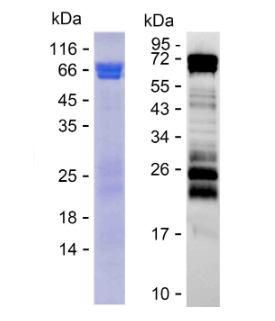
Background
IGF-I receptor is a disulfide-linked heterotetrameric transmembrane protein consisting of two alpha and two beta subunits. Both the alpha and beta subunits are encoded within a single receptor precursor cDNA. The proreceptor polypeptide is proteolytically cleaved and disulfide-linked to yield the mature heterotetrameric receptor. The alpha subunit of IGF-I receptor is extracellular while the beta subunit has an extracellular domain, a transmembrane domain and a cytoplasmic tyrosine kinase domain. The IGF-I receptor is highly expressed in all cell types and tissues.IGF-II R is a type I transmembrane glycoprotein that contains a 2,264 amino acid (aa) extracellular region, a 23 aa transmembrane segment segment and a 124 aa cytoplasmic tail. IGF-II R regulates many diverse biological functions that range from intracellular trafficking to the internalization of extracellular factors and modulation of cellular responses. It delivers newly synthesized M6P-tagged lysosomal enzymes from the trans-golgi network to endosomes, and facilitates the clearance of extracellular lysosomal and matrix degrading enzymes by internalization into clathrin-coated vesicles and delivery into endosomes. With respect to IGF-II biology, It would appear that IGF-II R is principally a regulator of local IGF-II levels, targeting IGF-II for destruction in lysosomes.The heterotetrameric receptors for insulin (INS R) and IGF-I (IGF-I R) are receptor tyrosine kinases that consist of two ligandbinding alpha subunits and two beta subunits. Ligand binding induces autophosphorylation on multiple tyrosine residues of beta subunits. Phosphorylation of Tyr1162 and 1163 on INS R and Tyr1135 and 1136 on IGF-I R stimulates intrinsic kinase activity.
IGF-I receptor is a disulfide-linked heterotetrameric transmembrane protein consisting of two alpha and two beta subunits. Both the alpha and beta subunits are encoded within a single receptor precursor cDNA. The proreceptor polypeptide is proteolytically cleaved and disulfide-linked to yield the mature heterotetrameric receptor. The alpha subunit of IGF-I receptor is extracellular while the beta subunit has an extracellular domain, a transmembrane domain and a cytoplasmic tyrosine kinase domain. The IGF-I receptor is highly expressed in all cell types and tissues.
IGF-II R is a type I transmembrane glycoprotein that contains a 2,264 amino acid (aa) extracellular region, a 23 aa transmembrane segment segment and a 124 aa cytoplasmic tail. IGF-II R regulates many diverse biological functions that range from intracellular trafficking to the internalization of extracellular factors and modulation of cellular responses. It delivers newly synthesized M6P-tagged lysosomal enzymes from the trans-golgi network to endosomes, and facilitates the clearance of extracellular lysosomal and matrix degrading enzymes by internalization into clathrin-coated vesicles and delivery into endosomes. With respect to IGF-II biology, It would appear that IGF-II R is principally a regulator of local IGF-II levels, targeting IGF-II for destruction in lysosomes.The heterotetrameric receptors for insulin (INS R) and IGF-I (IGF-I R) are receptor tyrosine kinases that consist of two ligandbinding alpha subunits and two beta subunits. Ligand binding induces autophosphorylation on multiple tyrosine residues of beta subunits. Phosphorylation of Tyr1162 and 1163 on INS R and Tyr1135 and 1136 on IGF-I R stimulates intrinsic kinase activity.
Overview
Standard Curve Range | 62.50 pg/ml-4000 pg/ml |
Standard Curve Gradient | 7 Points/3 Folds |
Number of Incubations | 2 |
Detectable Sample | Not specified |
Sample Volume | 50 μl |
Type | Not Ready-to-Use |
Operation Duration | 120min |
Alternative Names | Insulin-like growth factor I, Mechano growth factor, Somatomedin-C |
Gene Symbol | IGF1, IBP1, IGF-1 |
Entrez Gene | 3479 (Human) |
SwissProt | P05019 (Human) |
*AREX continuously optimizes our products. Webpage content may not reflect the latest updates. For inquiries, please contact info@arexbio.com or your local distributor.
Data
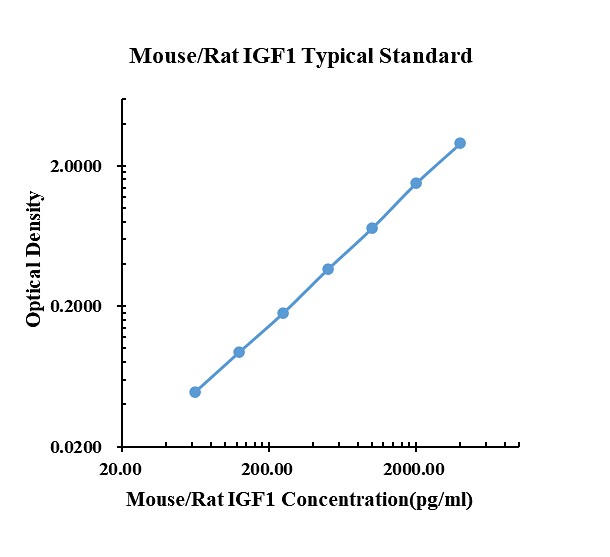
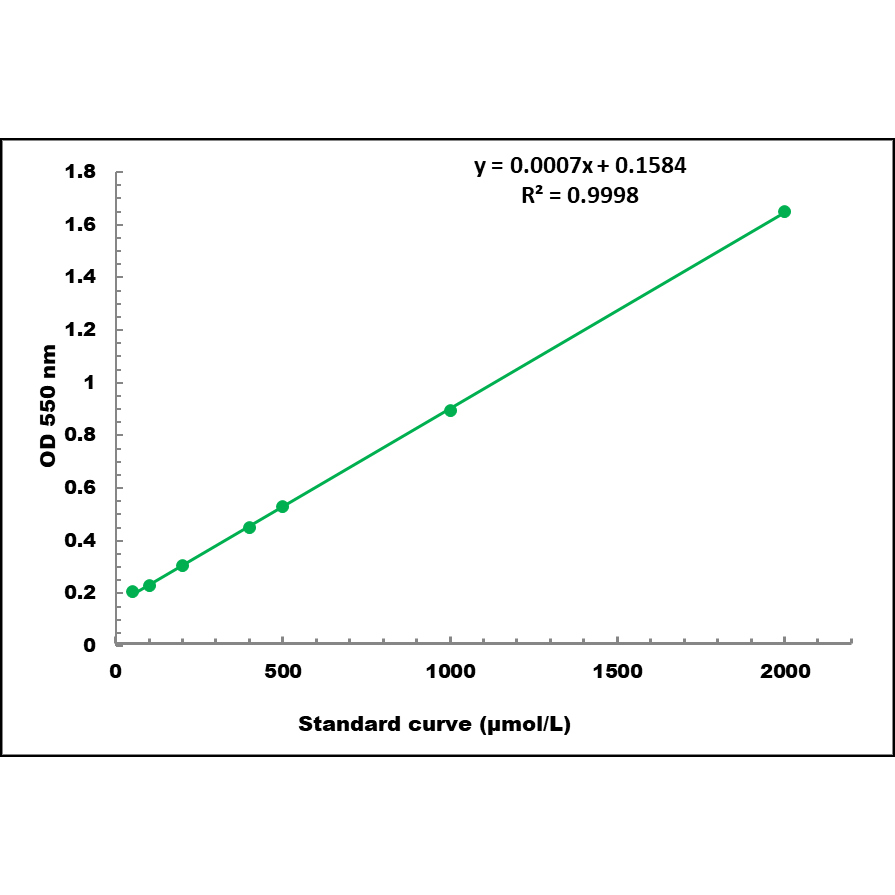
<table><tr><td>pg/ml</td><td>O.D.1</td><td>O.D.2</td><td>Average</td><td>Corrected</td></tr><tr><td>0.00</td><td>0.0413</td><td>0.0391</td><td>0.0402</td><td></td></tr><tr><td>62.50</td><td>0.0906</td><td>0.0876</td><td>0.0891</td><td>0.0489</td></tr><tr><td>125.00</td><td>0.1293</td><td>0.1396</td><td>0.1345</td><td>0.0943</td></tr><tr><td>250.00</td><td>0.2240</td><td>0.2156</td><td>0.2198</td><td>0.1796</td></tr><tr><td>500.00</td><td>0.4115</td><td>0.4003</td><td>0.4059</td><td>0.3657</td></tr><tr><td>1000.00</td><td>0.7669</td><td>0.7470</td><td>0.7570</td><td>0.7168</td></tr><tr><td>2000.00</td><td>1.5970</td><td>1.4890</td><td>1.5430</td><td>1.5028</td></tr><tr><td>4000.00</td><td>3.0150</td><td>2.8350</td><td>2.9250</td><td>2.8848</td></tr></table>
Product Features
• Optimized capture and detection antibody pairings with recommended concentrations save lengthy development time
• Development protocols are provided to guide further assay optimization
• Assay can be customized to your specific needs
• Economical alternative to complete kits
Kit Content
• Capture Antibody
• Detection Antibody
• Recombinant Standard
• Streptavidin conjugated to horseradish-peroxidase (Streptavidin-HRP)
Other Reagents Required
ARExSet® Ancillary Reagent Kit (5 plates): containing 96 well microplates, plate sealers, substrate solution, stop solution, plate coating buffer (PBS), wash buffer, and assay buffer. The components listed above may be purchased separately:
• 96 well microplates: AREX Biosciences, Catalog # DSEP01.
• Plate Sealers: AREX Biosciences, Catalog # DSSF01.
• Coating Buffer: 137 mM NaCl, 2.7 mM KCl, 8.1 mM Na2HPO4, 1.5 mM KH2PO4, pH 7.2-7.4, 0.2 μm filtered. AREX Biosciences, Catalog # DSCB01.
• Blocking Buffer: AREX Biosciences, Catalog # DSBB01.
• Wash Buffer: 0.05% Tween 20 in PBS, pH 7.2-7.4. AREX Biosciences, Catalog # DSWB01.
• Assay Buffer: 0.5%BSA,0.05%Tween20,PBS Solution.AREX Biosciences, Catalog # DSAB01
• Substrate Solution: Tetramethylbenzidine. AREX Biosciences, Catalog # DSTS01.
• Stop Solution: 0.5mol/L H2SO4. AREX Biosciences, Catalog # DSSS01.
Storage
Store components at 4°C or -20°C. Keep microplate wells sealed in a dry bag with desiccants. Do not expose test reagents to heat, sun or strong light during storage and usage. Please refer to the product user manual for detail temperatures of the components.
Note
For Research Use Only. Not for diagnostic, therapeutics, prophylactic or in vivo use.


 Instruction

 Product Details