Human Prostaglandin E2 ELISA Kit
 Instruction
Key features and details
- Sensitivity:
- Detection Range:
- Sample Types:
- Species:
- Detection Method:
- Target:
- Assay Type:
-
Brand:

CAT.NO. : ARE6653
USD Please choose
USD Please choose
Size:
Trail, Bulk size or Custom requests Please contact us
 Product Details
Background
Prostaglandin E2 (PGE2), a principal mediator of inflammation, plays a critical role in cervical ripening. Its biosynthesis in the cervix involves conversion of arachidonic acid to prostaglandin H2 (PGH2) by PGH2 synthase (PTGS2) and conversion of PGH2 to PGE2 by prostaglandin E synthase 2 (PTGES2). In preterm cervix, 15-hydroxyprostaglandin dehydrogenase (HPGD) is highly expressed repressing tissue PGE2 levels by converting PGE2 to inactive 15-keto PGE2. When term approaches, up-regulation of PTGS2 and down-regulation of HPGE concomitantly occur, increasing the local concentration of PGE2 in the cervix.
Overview
Product Description | Competitive Inhibition Enzyme Immunoassay for Quantitative Detection of Prostaglandin E2 Concentrations in Serum, Plasma, Tissue Homogenates, Cell Lysates, Cell Culture Supernates or Other Biological Fluids. |
Sensitivity | 1.36 pg/ml |
Detection Method | Colorimetric |
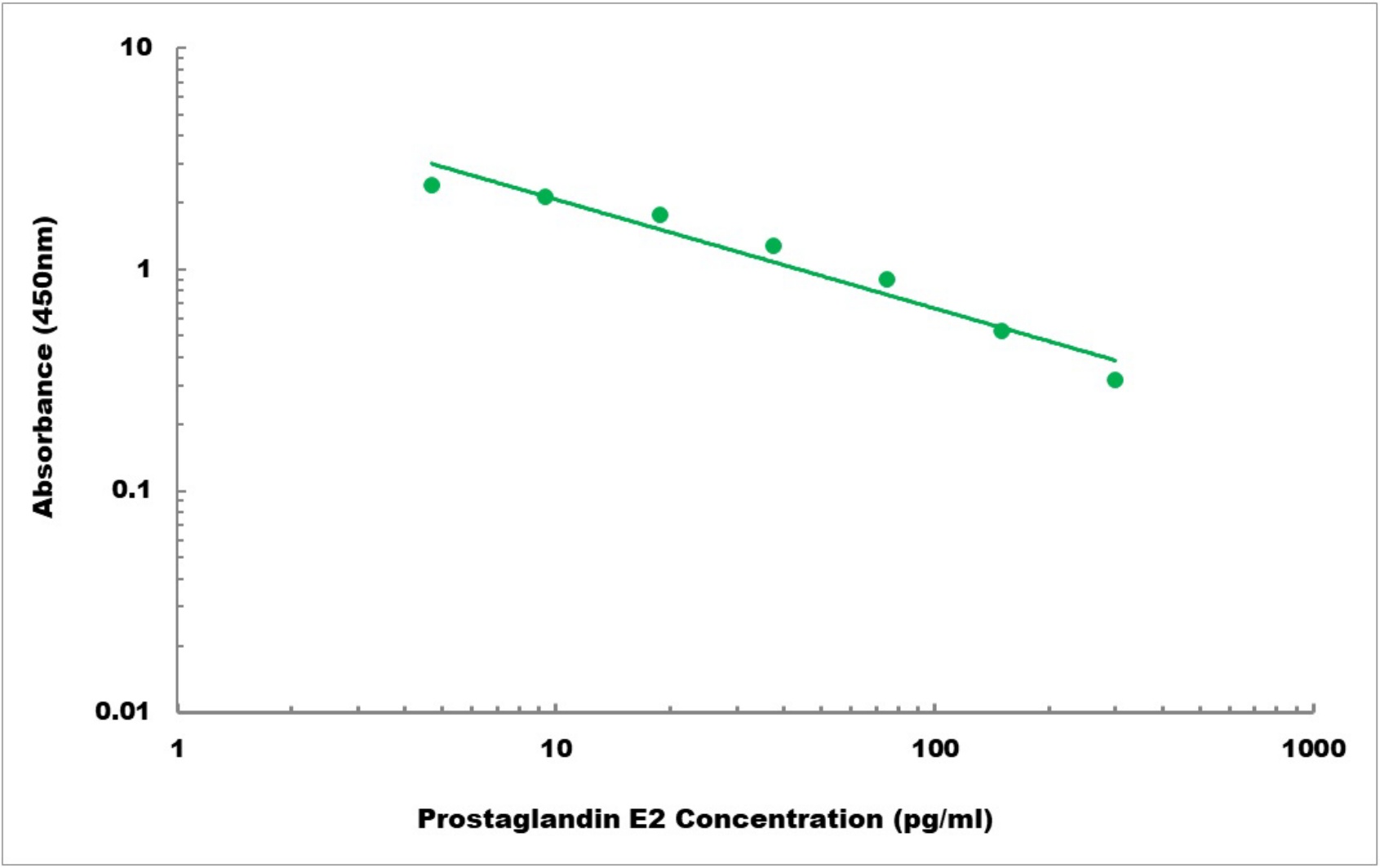
Detection Range | 4.68 pg/ml - 300 pg/ml |
Sample Type | Serum, Plasma, Tissue Homogenates, Cell Lysates, Cell Culture Supernates, Other Biological Fluids |
Alternative Names | PGE2; PG-E2; Prostaglandin E2 |
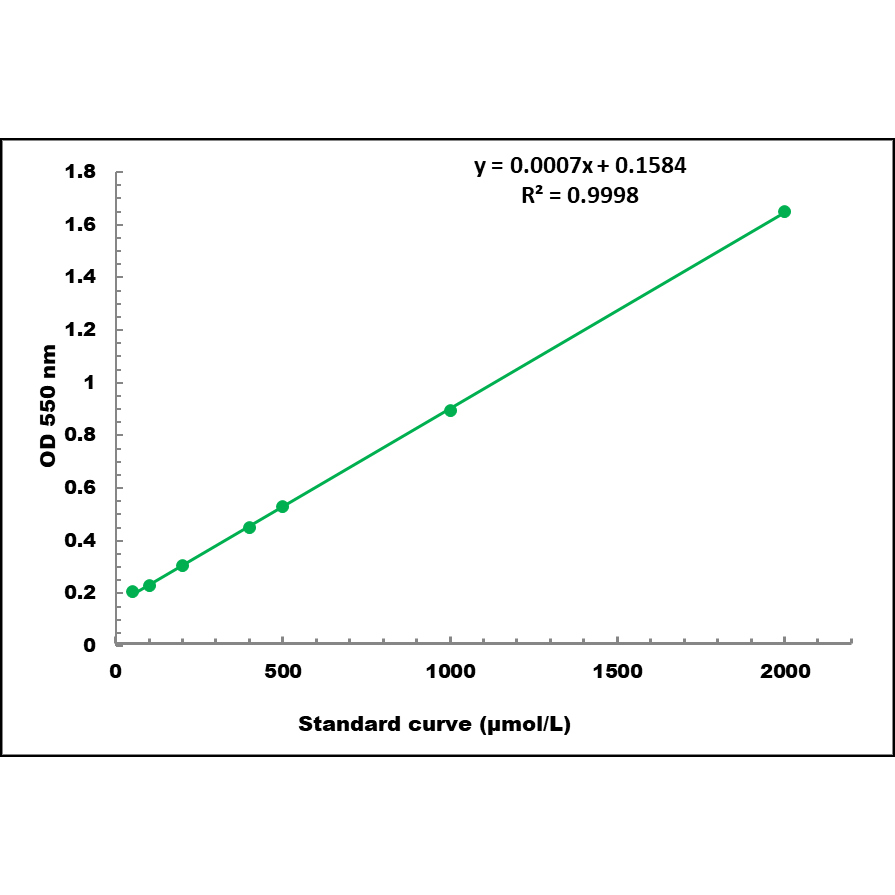
Data
Storage
Store components at 4°C or -20°C. Keep microplate wells sealed in a dry bag with desiccants. Do not expose test reagents to heat, sun or strong light during storage and usage. Please refer to the product user manual for detail temperatures of the components.
Note
For Research Use Only. Not for diagnostic, therapeutics, prophylactic or in vivo use.
FAQs
What is the principle of these ELISA kits?

The kits are based on the sandwich or competitive ELISA principle, using specific antibodies and enzyme-conjugated detection for quantitative measurement of the target analyte.
What sample types can be used with the ELISA kits?
Suitable samples typically include serum, plasma, cell culture supernatant, tissue homogenates, and other biological fluids. Please check the specific Datasheet for recommended sample types.
How should the kits be stored and what is the shelf life?
Store components at 4°C or -20°C. Keep microplate wells sealed in a dry bag with desiccants. Do not expose test reagents to heat, sun or strong light during storage and usage. Please refer to the product user manual for detail temperatures of the components.
What is the precision and reproducibility of the kits?
The kits are optimized for good intra- and inter-assay precision when performed according to the protocol. Coefficient of variation (CV) values are generally low.
Do you provide technical support or troubleshooting guidance?
Yes. We provide detailed Datasheets, Certificates of Analysis (CoA), and technical support to help with assay performance and troubleshooting.
New Products