Anticuerpo policlonal de conejo LC3B

Características y detalles clave

Anticuerpo policlonal de conejo contra LC3B
  • Objetivo: LC3B
  • Fuente/Anfitrión: Conejo
  • Reactividad: Humano, Ratón, Rata
  • Clonalidad: policlonal
  • Aplicaciones: BM, CHI, FI/CCI
  • Conjugación: Sin conjugar
  • Almacenamiento: a-20°C
  • Marca:
CAT.NO. : APA12463
US$ Por favor elige
US$ Por favor elige
Tamaño:
Sendero, tamaño a granel o solicitudes personalizadas Por favor contáctenos
Detalles del producto
Antecedentes
Ubiquitin-like modifier involved in formation of autophagosomal vacuoles (autophagosomes) . Plays a role in mitophagy which contributes to regulate mitochondrial quantity and quality by eliminating the mitochondria to a basal level to fulfill cellular energy requirements and preventing excess ROS production . In response to cellular stress and upon mitochondria fission, binds C-18 ceramides and anchors autophagolysosomes to outer mitochondrial membranes to eliminate damaged mitochondria . While LC3s are involved in elongation of the phagophore membrane, the GABARAP/GATE-16 subfamily is essential for a later stage in autophagosome maturation . Promotes primary ciliogenesis by removing OFD1 from centriolar satellites via the autophagic pathway .
Solicitud
To ensure optimal assay performance, AREX recommends conducting reagent titration tailored to each testing system for optimal detection results.

WB

1:1000 - 1:2000

IHC

1:200 - 1:500

FI/CCI

1:100 - 1:200

*Results are sample-specific. Please refer to your local assay conditions and test parameters for reference.
Descripción general

Descripción

Anticuerpo policlonal de conejo contra LC3B

Especificidad

Reconoce niveles endógenos de proteína LC3B.

Tipo de anticuerpo

Anticuerpo primario

Inmunógeno

Proteína recombinante correspondiente a LC3B humana.

Purificación

El anticuerpo se purificó mediante cromatografía de afinidad de inmunógeno.

Peso Molecular

Previsto: 14 kD; Observados: 14; 16kD

Formulario/búfer

Liquid in 0.42% Potassium phosphate, 0.87% Sodium chloride, pH 7.3, 30% glycerol, and 0.01% sodium azide.

Nombres alternativos

MAP1ALC3; Microtubule-associated proteins 1A/1B light chain 3B; Autophagy-related protein LC3 B; Autophagy-related ubiquitin-like modifier LC3 B; MAP1 light chain 3-like protein 2; MAP1A/MAP1B light chain 3 B; MAP1A/MAP1B LC3 B; Microtubule-associated protein 1 light chain 3 beta

Símbolo genético

MAP1LC3B

Entrez Gene

81631 (humano); 67443 (ratón); 64862 (rata)

SwissProt

Q9GZQ8(Humano); Q9CQV6(Ratón); Q62625 (Rata)

*AREX continuously optimizes our products. Webpage content may not reflect the latest updates. For inquiries, please contact info@arexbio.com or your local distributor.
*Clone Number, Reactivity, Source/Host and Clonality can be found in the product name and Key Features section above.
Datos

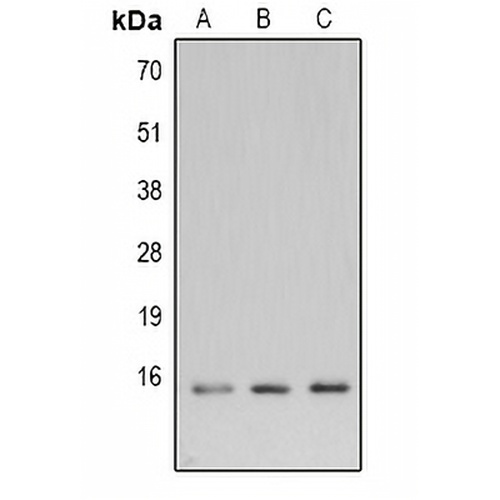
Western blot analysis of LC3B expression in Hela (A), NIH3T3 (B), rat brain (C) whole cell lysates. (Predicted band size: 14 kD; Observed band size: 14; 16 kD)
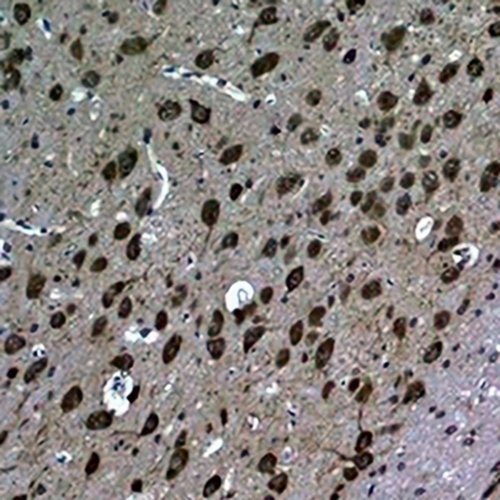
Immunohistochemical analysis of LC3B staining in rat brain formalin fixed paraffin embedded tissue section. The section was pre-treated using heat mediated antigen retrieval with sodium citrate buffer (pH 6.0). The section was then incubated with the antibody at room temperature and detected using an HRP conjugated compact polymer system. DAB was used as the chromogen. The section was then counterstained with haematoxylin and mounted with DPX.
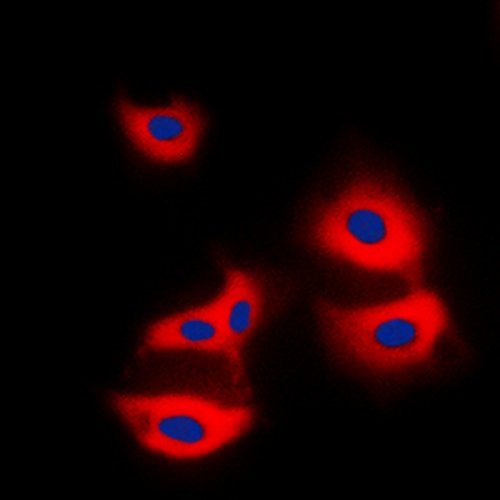
Immunofluorescent analysis of LC3B staining in Hela cells. Formalin-fixed cells were permeabilized with 0.1% Triton X-100 in TBS for 5-10 minutes and blocked with 3% BSA-PBS for 30 minutes at room temperature. Cells were probed with the primary antibody in 3% BSA-PBS and incubated overnight at 4 °C in a hidified chamber. Cells were washed with PBST and incubated with a DyLight 594-conjugated secondary antibody (red) in PBS at room temperature in the dark. DAPI was used to stain the cell nuclei (blue).

Almacenamiento
Store at 4°C short term. For long term storage, store at -20°C, avoiding freeze/thaw cycles.
Nota
Sólo para uso en investigación. No apto para uso en procedimientos de diagnóstico.
Preguntas frecuentes
¿Cuáles son los principales tipos de anticuerpos de investigación y en qué se diferencian?
Research antibodies are mainly divided into monoclonal antibodies and polyclonal antibodies. Monoclonal antibodies typically offer higher specificity and better batch-to-batch consistency, while polyclonal antibodies often provide stronger affinity but may show more variation between batches. The choice depends on your specific experimental needs.
¿Cómo puedo saber si un anticuerpo de investigación es adecuado para mi experimento?
It is recommended to carefully review the product datasheet for validated applications, species reactivity, recommended dilutions, and published references. For new antibodies, performing a small-scale validation with positive control samples is usually helpful.
¿Puede el almacenamiento inadecuado de anticuerpos de investigación afectar los resultados experimentales?
Yes. Antibodies are sensitive to temperature, repeated freeze-thaw cycles, and contamination. Improper storage may lead to reduced activity, increased background, or weaker signals. It is best to follow the storage instructions provided in the product datasheet.
¿Por qué la dilución recomendada en la hoja de datos no funciona bien en mi experimento?
The recommended dilution is based on the supplier’s test conditions. Factors such as sample type, fixation method, and detection system in your lab can influence the optimal working concentration. Performing a dilution series optimization in your own system is often necessary.
What precautions should I take when using a newly purchased research antibody for the first time?
It is advisable to briefly centrifuge the antibody (especially concentrated or lyophilized ones), then perform a small-scale pilot experiment using the recommended conditions. Recording the batch number and usage date is also helpful for future tracking.
Nuevos productos
Ponte en contacto con AREX
Nombre:*
Tel/Teléfono:*
Empresa:*
Correo electrónico:*
Consulta:
Captcha*
Submitting your email information means that you are willing to receive email information from AREX regarding technology, applications, products, and events. By clicking on the 'unsubscribe' button in the email or by contacting info@arexbio.com You can unsubscribe at any time by sending an email. Regarding your data usage information, please refer to ourpolítica de privacidad.
© AREX 2024. Todos los derechos reservados. Mapa del sitio
4.285181s