CD9 Rabbit Monoclonal Antibody(ARA959)
 Datasheet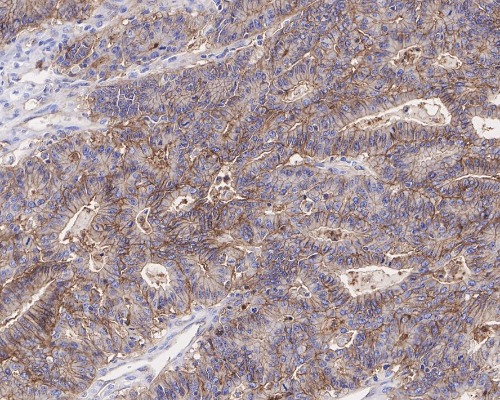
Key features and details
- Target:
- Host:
- Reactivity:
- Clonality:
- Application:
- Storage:
-
Brand:

CAT.NO. : ARA6811
US$ Please choose
US$ Please choose
Size:
Trail, Bulk size or Custom requests Please contact us
 Product Details
Background
CD9 is a gene encoding a protein that is a member of the transmembrane 4 superfamily also known as the tetraspanin family. It is a cell surface glycoprotein that consists of four transmembrane regions and has two extracellular loops that contain disulfide bonds which are conserved throughout the tetraspanin family. Also containing distinct palmitoylation sites that allows CD9 to interact with lipids and other proteins. Tetraspanin proteins are involved in a multitude of biological processes such as adhesion, motility, membrane fusion, signaling and protein trafficking. Tetraspanins play a role in many biological processes because of their ability to interact with many different proteins including interactions between each other. Their distinct palmitoylation sites allow them to organize on the membrane into tetraspanin-enriched microdomains (TEM). These TEMs are thought to play a role in many cellular processes including exosome biogenesis. CD9 is commonly used as a marker for exosomes as it is contained on their surface.
Application
To ensure optimal assay performance, AREX recommends conducting reagent titration tailored to each testing system for optimal detection results.
*Results are sample-specific. Please refer to your local assay conditions and test parameters for reference.
Application | Dilution Ratio |
IHC | 1:200 - 1:1000 |
Overview
Antibody Type | Recombinant Rabbit monoclonal Antibody |
Immunogen | Synthetic peptide within human CD9 aa 196-228/228. |
Molecular Weight | Predicted band size: 25 kDa |
Positive Control | HeLa cell lysate, MCF7 cell lysate, HepG2 cell lysate, SW480 cell lysate, BT-20 cell lysate, human colon carcinoma tissue, human lung carcinoma tissue. |
Conjugation | unconjugated |
Form/Buffer | PBS (pH7.4), 0.1% BSA, 40% Glycerol. Preservative: 0.05% Sodium Azide |
Isotype | IgG |
Purification | Protein A affinity purified |
*Clone Number, Reactivity, Source/Host and Clonality can be found in the product name and Key Features section above.
Data
Immunohistochemical staining of human carcinoma tissue was performed using CD9 Rabbit Monoclonal Antibody(ARA959).
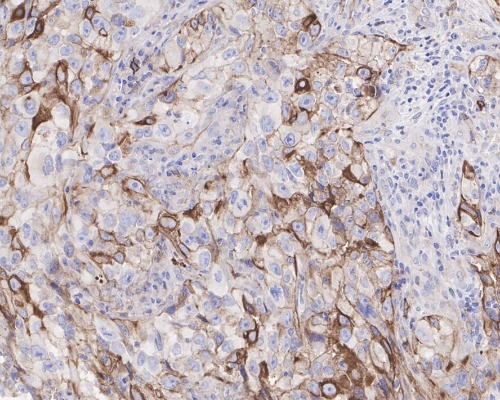
Immunohistochemical staining of human lung carcinoma tissue was performed using CD9 Rabbit Monoclonal Antibody(ARA959).
Storage
Shipped at 4℃. Store at -20℃ for one year. Avoid repeated freeze/thaw cycles.
Note
For Research Use Only. Not for diagnostic, therapeutics, prophylactic or in vivo use.
FAQs
What are the main types of research antibodies and how do they differ?

Research antibodies are mainly divided into monoclonal antibodies and polyclonal antibodies. Monoclonal antibodies typically offer higher specificity and better batch-to-batch consistency, while polyclonal antibodies often provide stronger affinity but may show more variation between batches. The choice depends on your specific experimental needs.
How can I tell if a research antibody is suitable for my experiment?
It is recommended to carefully review the product datasheet for validated applications, species reactivity, recommended dilutions, and published references. For new antibodies, performing a small-scale validation with positive control samples is usually helpful.
Can improper storage of research antibodies affect experimental results?
Yes. Antibodies are sensitive to temperature, repeated freeze-thaw cycles, and contamination. Improper storage may lead to reduced activity, increased background, or weaker signals. It is best to follow the storage instructions provided in the product datasheet.
Why doesn’t the recommended dilution in the datasheet work well in my experiment?
The recommended dilution is based on the supplier’s test conditions. Factors such as sample type, fixation method, and detection system in your lab can influence the optimal working concentration. Performing a dilution series optimization in your own system is often necessary.
What precautions should I take when using a newly purchased research antibody for the first time?
It is advisable to briefly centrifuge the antibody (especially concentrated or lyophilized ones), then perform a small-scale pilot experiment using the recommended conditions. Recording the batch number and usage date is also helpful for future tracking.
New Products